




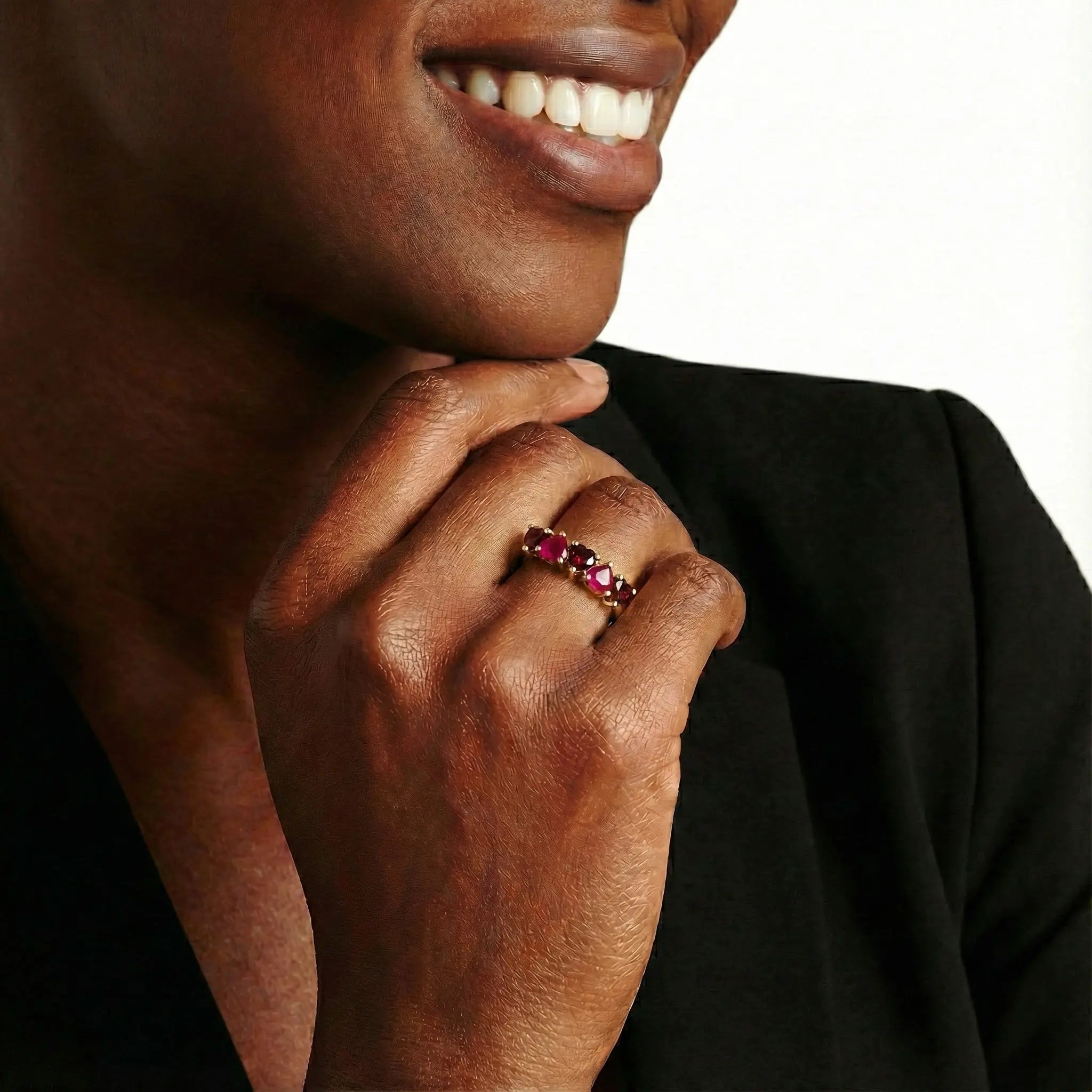

Garnet and Ruby are two of the most popular red gemstones in jewelry. For centuries, people have been mesmerized by the appearance of red gemstones like these because they are beautiful and symbolize passion, power, fire, vitality, and love.
However, while garnet and ruby may appear similar at first glance, they differ in color, durability, rarity, and price. Choosing the best of the two gemstones is a matter of preference, as it depends on your budget, aesthetic preferences, lifestyle, and even your spiritual beliefs.
We will explore the incredible differences between garnets and rubies so that you can make a more informed decision when choosing one or the other for your next jewelry piece.
Garnet vs. Ruby at a Glance
Before we describe the difference between each gemstone in detail, we will highlight the general differences between them in terms of their color, hardness, durability, price, rarity, and everyday wear suitability. That way, you can understand the characteristics of each gemstone as you learn more about them.
| Feature | Garnet | Ruby |
|---|---|---|
| Color | Several red color tones with hints of dark brown, orange, or purple undertones. | Vibrant red color with slight pink, purplish, or orange undertones. |
| Hardness (Mohs Scale) | 6.5–7.5 | 9.0 |
| Durability | Good (Requires some long-term care to prevent scratches, abrasions, and chips) | Excellent (Highly resilient to scratching, chipping, and breaking) |
| Price | More Affordable | More Expensive |
| Rarity | Vast Global Supply | Extremely Rare |
| Everyday Wear | Good for daily wear if you don’t mind the protective care and maintenance required. | Excellent for daily wear; it doesn’t require many precautions for protection. |
Appearance: How Do Garnet and Ruby Differ?
A layperson can probably spot the general color difference between a garnet and a ruby at first glance. Even though both are called red gemstones, each one has a different red tone.
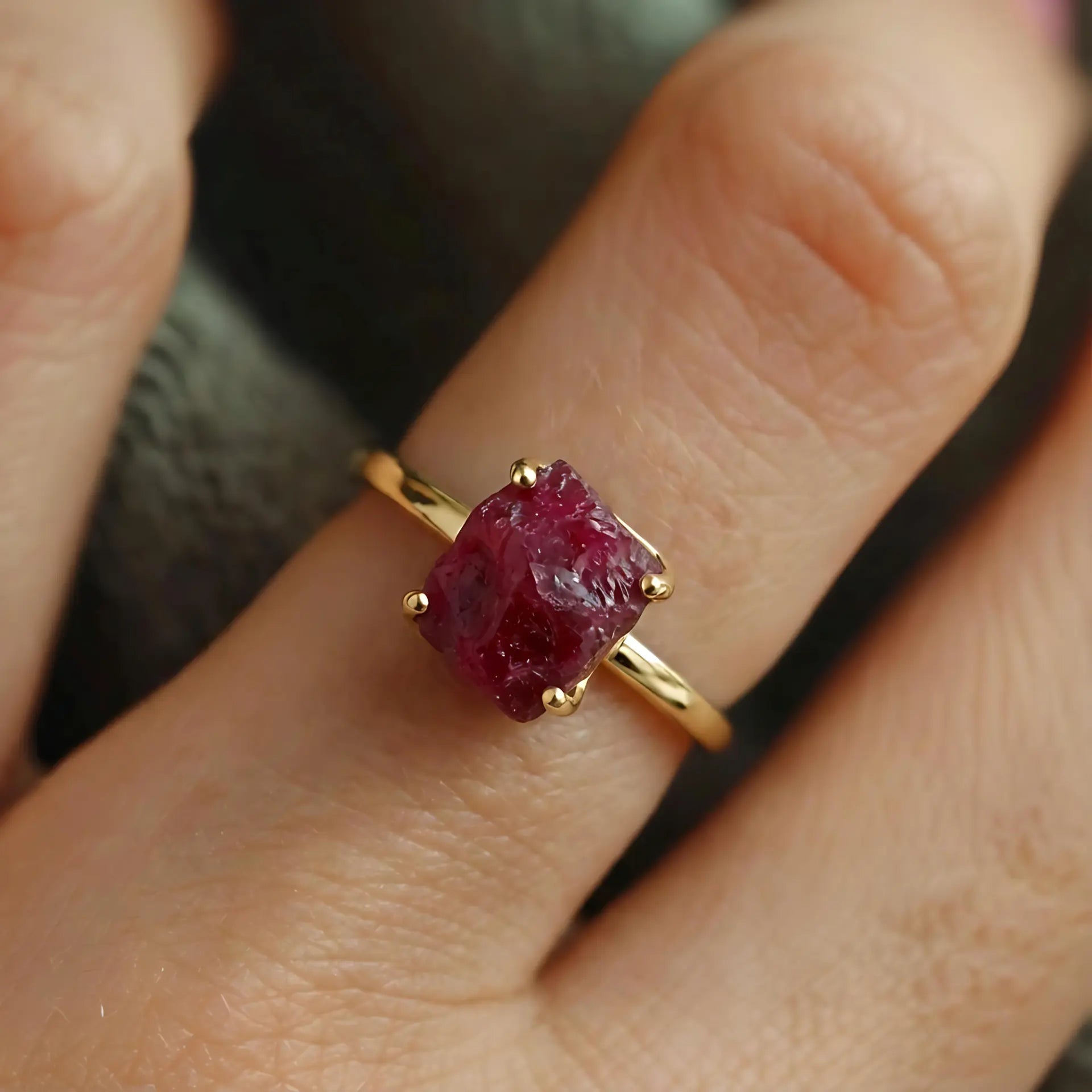
For instance, rubies are known for their highly saturated signature red color and special fluorescent red glow when exposed to UV light from the sun. Modern culture refers to it as “ruby red” to distinguish its electric red appearance from other duller red colors.
Garnets represent an entire family of silicate minerals with deep red or brownish-red colors. Some of the most popular red garnets used in commercial jewelry are almandine, pyrope, and rhodolite. Their darker red color comes from the manganese and iron in the minerals. And since they lack chromium, garnets don’t usually have any fluorescent attributes as rubies do.
Regarding their brilliance and sparkle, both garnets and rubies offer a beautiful appearance. Of course, the level of brilliance and sparkle depends on how well and precisely they were cut. Rubies are highly reflective gemstones, which means they will bounce and split most light that shines onto them. This reflective light is what gives rubies that unique sparkle they are known for.
Garnets are far less reflective. Light passes directly through the gemstones, creating a single beam of unsplit light. On the other hand, garnets are much clearer and far more transparent than rubies. The reason is that rubies have visible inclusions inside of them, which are like tiny silk rutile needles that create a sort of “cloudy” internal appearance.
Therefore, if you know how to look for these aesthetic differences, you will be able to use your naked eye to identify rubies and garnets by simply looking at them and observing their visual characteristics.
Durability and Everyday Wear
Durability is an important consideration for a lot of people shopping for jewelry, especially something meant to be long-lasting, like an engagement ring or wedding ring. They want their rings and daily jewelry pieces to resist scratches, breaking, shipping, heat, chemicals, light, and other potential impacts.
Professional jewelers analyze the durability of jewelry pieces by assessing their hardness, toughness, and stability. For instance, Mohs scale of mineral hardness (from 0 to 10) can indicate a gemstone’s level of scratch resistance, with 0 being the softest and 10 being the hardest. A ruby scores a 9 on the Mohs scale, while garnet scores about a 7.
To put this into perspective, a diamond is the only gemstone to score a 10 on the Mohs scale. The next closest gemstones on this hardness scale are both rubies and sapphires. Because of this, a ruby has an exceptional level of hardness and scratch resistance from everyday impact and common environmental hazards.
Furthermore, rubies have no structural cleavage, which means they are not prone to splitting when they are struck. Their toughness and resilience can help support long-term daily use and wear while enduring years of bumps, knocks, and other forms of impact. Any jewelry with a ruby gemstone should last quite a long time.
Garnets are not as long-lasting. Even though a garnet is reasonably hard with a 7 rating on the Mohs scale, it will not last as long as a ruby would. Sure, it can endure years of continuous daily wear, but it is also susceptible to tiny microscopic scratches on its facets. After years of wear, you will start to notice this wear because the gemstone will begin to look duller as time goes on.
You should also keep in mind that garnets are more brittle than rubies. If a garnet suffers severe impact against another hard object or surface, it could potentially chip or crack along the edges. It does not mean that garnet is unsuitable for everyday use, but it does mean that you need to be more careful in how you care for the gemstone.
Most jewelers recommend using protective settings on garnet jewelry to help make it last longer. A bezel setting, for instance, encircles the gemstone with a metal rim to protect its edges from harmful impact. You will also have better luck wearing garnet earrings and necklaces daily because they suffer significantly less wear than garnet rings and bracelets.
Value and Price
The price of jewelry is one of the biggest considerations that people have when shopping for jewelry. If you want to know the price difference between a ruby and a garnet, there is no question that a ruby is always going to be much more expensive. The reason is quite simple.
Rubies are rarer and more geologically scarce in the world. Experts consider rubies to be among the rarest of all colored gemstones, even more scarce than natural diamonds. There is always going to be a high global demand for scarce gemstones like rubies. As a result, large, transparent, and vibrantly colored rubies are going to have the biggest price tags.
Keep in mind that some rubies are treated with heat to intensify their vibrant red color. Heat-treated rubies are more affordable because they have less demand in the marketplace. It is the raw, untreated rubies that have the highest price tag because they are rarer and more sought after by investors and collectors.
Garnets serve as an affordable and more accessible gemstone for jewelry. Not only are there many different mineral groups within the garnet family of gemstones, but they are also mined in multiple countries and continents throughout the world. The abundant supply of garnets gives them a considerably lower sales price than rubies.
Let’s do a price comparison so that you can understand the difference better. You could probably purchase a two or three-carat garnet jewelry piece for a few hundred dollars, whereas a raw one-carat ruby ring would cost anywhere from $1,000 to $7,000.
Which Stone Fits Your Style?
Everyone has their own personal preferences when it comes to their preferred jewelry pieces. Garnets are ideal for those who appreciate rich, earthy reds and accessible luxury jewelry. Ruby is better for those seeking a classic, timeless gemstone with exceptional durability.
The average person will prioritize price and beauty over all other considerations when choosing jewelry. Garnets satisfy both the price and beauty requirements because they are affordable and contain a luxurious-looking red color. Most garnets are also untreated, which satisfies anyone seeking natural jewelry pieces.
However, if someone cares more about the value and durability of their jewelry, they will want a ruby gemstone instead. Rubies can last a lifetime and be handed down to others as an important family heirloom. That is why they are used quite frequently in engagement ring designs and just luxury ring designs in general. As long as you don’t mind paying the higher price tag, a ruby gemstone is a much more worthy investment.
Garnet or Ruby?
In the end, the best choice is based on your budget, lifestyle, and personal style. Neither stone is better than the other. In fact, both stones offer beauty, durability, and luxury, but at different levels. The average person will probably choose garnets simply because they are more affordable and accessible than rubies. But those who want to pay more for a durable, vibrant jewelry piece will likely prefer a ruby.


